

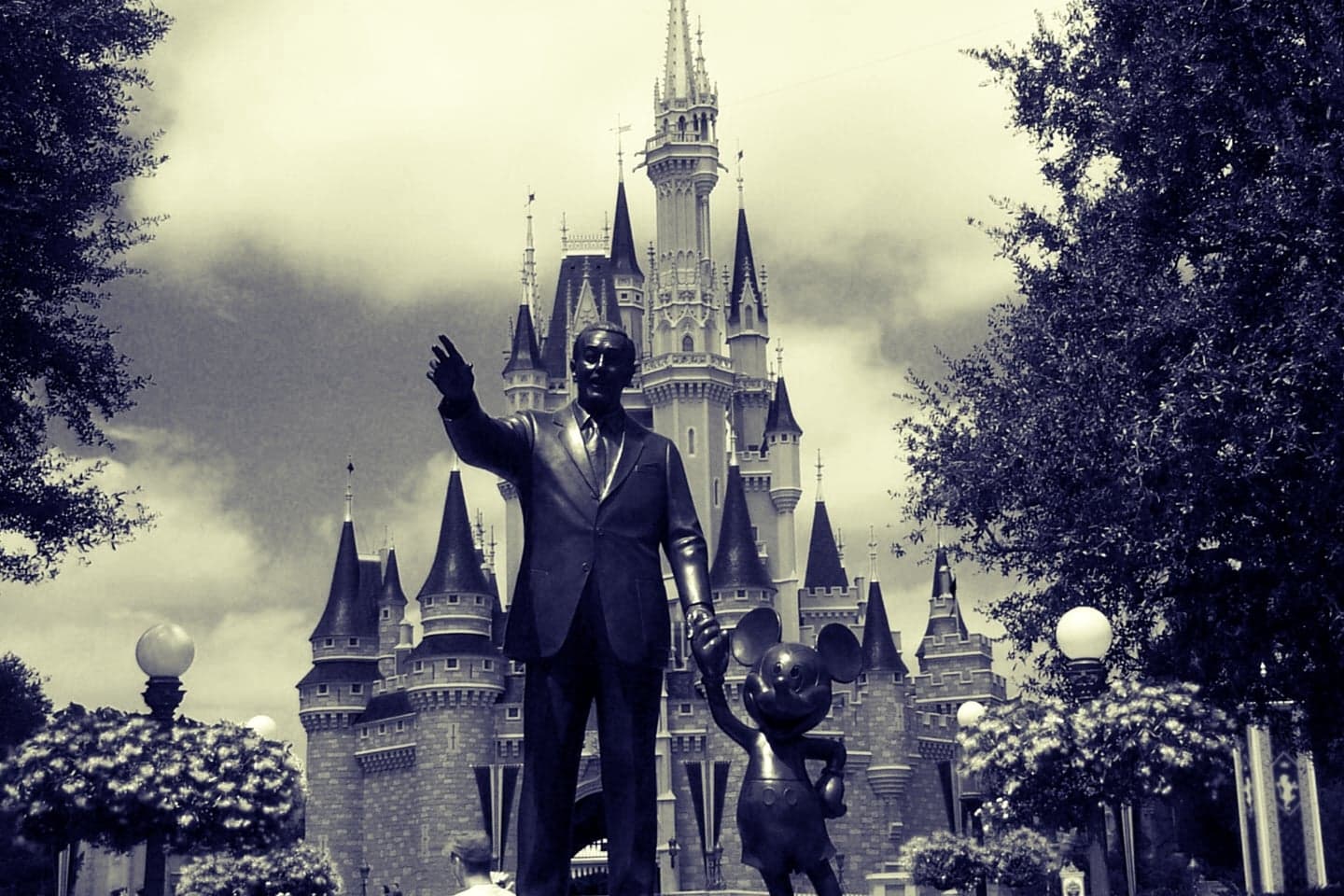
Once upon a time, Walt Disney had a dream of creating a world where people could escape reality and enjoy a magical experience. He wanted more than a park. He wanted a place where families could step through the gate and find themselves inside a story, guided by music and make believe and a thousand tiny details that felt as real as brick and mortar. Disneyland proved the idea in 1955. Then Walt set his sights on the East, on a blank map where he could build a larger canvas and, one day, a city of tomorrow he called EPCOT. He did not live to see it finished, but the company kept the fire burning.
To build a kingdom in Florida you needed land and plenty of it, and you needed to buy it without saying your name. That is where the fairy tale met tradecraft. Accounts describe Miami lawyer Paul Helliwell, a veteran of the wartime intelligence world, helping arrange a network of quiet corporations that purchased pasture and swamp while Disney survey teams traced highways in the sky. Others note connections to William Donovan, the legendary head of the old Office of Strategic Services, through attorneys who moved in his orbit. What is certain is that secrecy held until enough acres were gathered to make the dream possible, and by the time the secret slipped it was already too late for prices to soar out of reach.
With the land secured the company needed a civic engine to pump water and power and to pour roads across the pines. In 1967 Florida created the Reedy Creek Improvement District, a special district that let Disney handle its own utilities, public works, and fire protection on its property and issue bonds to pay for it. That unusual frame of self rule turned an ocean of mud into a functioning city that served the show. When the Magic Kingdom opened in 1971, the backstage city was already at work, invisible and relentless.
Politics eventually brought a reckoning. In the spring of 2022 lawmakers passed a bill to dissolve independent special districts created before the modern state constitution, which meant Reedy Creek was marked to disappear in the summer of 2023. Rather than let services and debt fall into chaos, the Legislature acted again early in 2023 and renamed and rewired the district as the Central Florida Tourism Oversight District. The revived district kept the pipes and pavement running but now answered to a board appointed by the governor. The stage show did not flicker, but the control booth changed hands.
Lawyers and judges entered, argued, and exited. After months of filings the company and the new district reached peace in 2024, clearing away last minute agreements from the previous board and replacing them with a formal development deal. The numbers were large enough to make headlines. Disney committed to invest at least eight billion dollars in the next decade, within a broader plan that could reach seventeen billion over ten to twenty years, paired with pledges on local contracting, infrastructure cooperation, and housing support. The feud cooled and the focus returned to construction and operations.
Planning then stepped forward with its own story line. In the summer of 2025 the district moved to adopt a comprehensive plan that runs to the year 2045 and leaves room for a future major theme park, while also mapping utilities, transportation corridors, and land use for a generation. Road work marched on as a symbol of the backstage city in motion, including a project to widen Western Way toward the heart of the resort so that tomorrow’s guests can flow more easily to tomorrow’s rides. The cloak and ledger never left. They simply changed offices.
Yet even the grandest kingdoms have hard seasons. Streaming has finally shown signs of profit, but it arrived alongside price increases that test subscribers. The parks that once saw automatic summer surges have shown softer days and shorter lines, a quiet signal that demand is no longer untouchable. The company has trimmed staff in 2025 as the old world of television continues to sag and as leaders search for a cleaner balance sheet. The stock, while better than its slump, still sits far below the peak it reached in the bright days of 2021. The lights are still on and the castle still shines at night, but the wind has grown more complicated.
So the story circles back to its opening scene. Once upon a time a dreamer used a little magic and a little quiet tradecraft to turn cow fields into a world of make believe. The special district that powered the dream changed its name and its masters, but the machine still hums behind the curtain, moving water and traffic and money while the parades roll by. And as of today the kingdom faces headwinds that would have tested even its founder. Perhaps the next chapter needs more than nostalgia. Perhaps it needs a small measure of the same cool discipline that once hid purchases in plain sight and stitched a city together behind the story. If the company can borrow a page from that old intelligence playbook, if it can pair wonder with cunning and swap noise for precision, then a little help from the world of espionage might be all it needs to add some magic once again.
About the author:
P.J. Agness is the founder of Archangel Protective Intelligence, a member of the OSS Society, and an intelligence consultant for Kowala Media. He has yet to successfully secure self-governing status for the home of Kowala Media founder Matt Kowalski. P.J. is the author of the Amazon bestseller Street Level Spycraft, and published several books on the subject of espionage. Learn more about PJ’s work: https://linktr.ee/pjagness